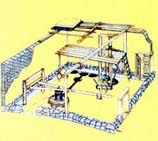
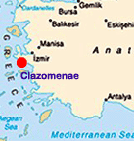
Mediterranean Olive and an ancient
Olive Oil
factory in Clazomenae, South Western Turkey
The Olive tree stands firmly
rooted in history, with
references dating back to the 6th millennium BC.
The Bible tells us that the olive grew from one of the
three seeds in the Garden of Eden, while the story of
Noah's Ark and the dove, which returned carrying a
sprig of olive branch, has led to it being adopted as
the universal symbol of peace.
Since ancient times, olive oil has been
known for its
excellent nutritional qualities. It has been one of the
essential features of the diet of many Mediterranean civilizations,
especially in Anatolia Turkey.
In Turkish cuisine, olive oil holds an important place
with a range of dishes called "Zeytinyagli" which
are
served cold.
Having
the longest coastline on the Mediterranean
Sea, Turkey is one of the major producers of olives
in the region. Today Turkey is the 4th largest olive
oil producer in the world and most of its exports are
to Italy, Spain and the USA.
Ancient Olive Oil Factory in Clazomenae, SW
Turkey
Ancient Clazomenae was one the 12 cities of Ionia.
Its history goes back 12 C BC. Clazomenae's
economic success was based on olive oil production.
Excavations
in this region have revealed the earliest
known olive processing plant, showing the
importance of Anatolia in the development of olive cultivation
and technology. This was the first time
that archeologists discovered a complete olive oil factory.
Continuous production by means of a 3
compartment oil separation system was first carried
out here, showing that Clazomenae possessed technology far
ahead of its contemporaries. After
the excavation was completed it was seen that
technology developed at this city 2,500 years ago
was basically the same as that used today.